How to sell your home in Singapore without paying agent commission

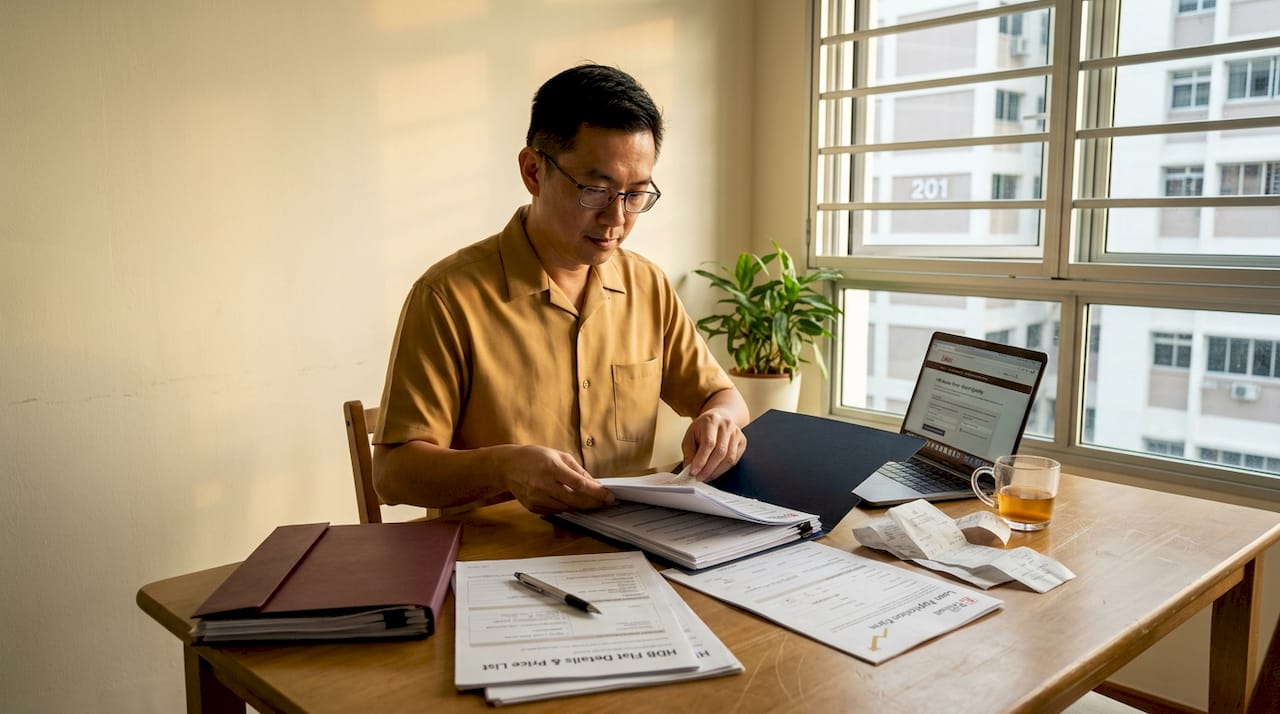
Paying a property agent 1% to 2% commission on your home sale can cost you anywhere from $10,000 to $30,000 or more, depending on your selling price. That’s real money leaving your pocket. The good news is that DIY home selling is completely legal in Singapore for both HDB flats and private properties. This guide walks you through every requirement, every step, and every mistake to avoid so you can complete a compliant, profitable sale without handing over a large commission check.
Table of Contents
Key Takeaways
Point | Details |
Agent commission is optional | You are not required by law to use an agent to sell your HDB or private home in Singapore. |
Mandatory fees remain | You must pay legal, admin, and government fees even if you skip agent commission. |
Follow official workflow | Use HDB’s My Flat Dashboard and comply with all required legal steps for a successful DIY sale. |
Common pitfalls exist | Missing deadlines, paperwork errors, or mishandling negotiations can undermine your DIY sale. |
Expert help is available | Even when selling on your own, you can access low-cost support to avoid mistakes and streamline the process. |
What you need to know before selling without an agent
Now that you understand the commission concern, let’s clarify what “commission-free” selling really means and what you’ll need to prepare.
First, the most important clarification: selling without an agent does not mean selling for free. You will still pay certain mandatory fees. What you eliminate is the agent’s commission, which is the biggest single cost in most transactions.
Here is a quick breakdown of what stays and what goes:
Cost item | With agent | Without agent |
Agent commission (1%–2%) | $10,000–$30,000+ | $0 |
Legal/conveyancing fees | $2,000–$3,000 | $2,000–$3,000 |
HDB administrative fees | ~$80 | ~$80 |
Option to Purchase (OTP) fee | Varies | Varies |
Stamp duties | As applicable | As applicable |
The savings are significant. But the responsibility shifts entirely to you.
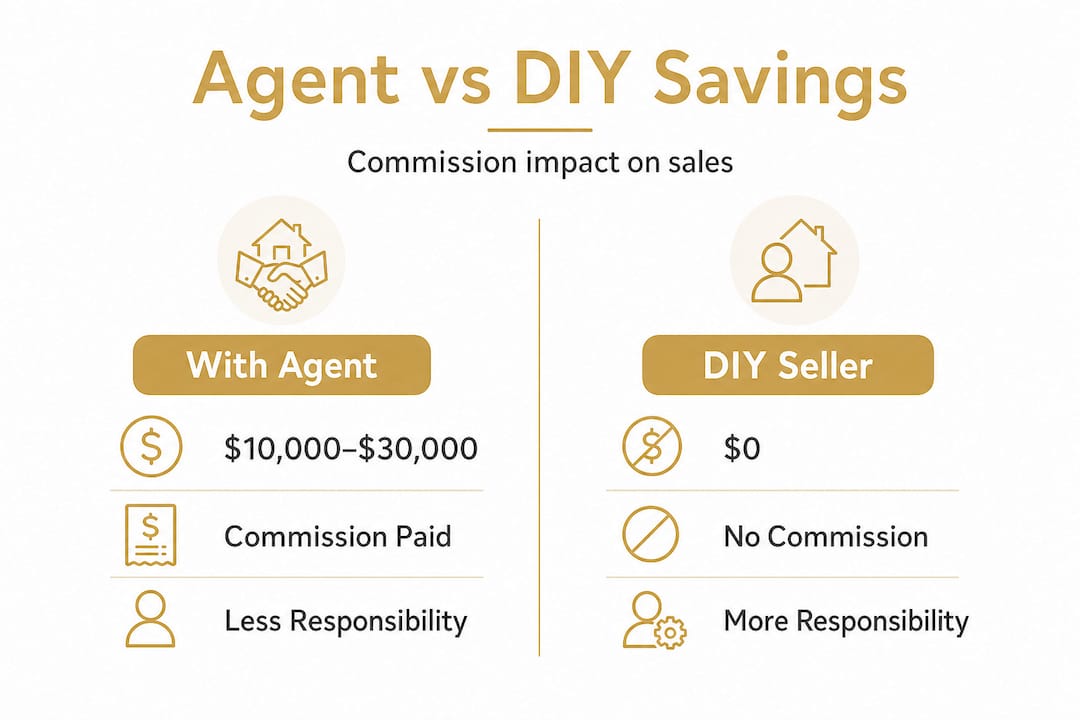
When you sell without an agent, you handle all documentation, all compliance checks, and all negotiations directly. For HDB flats, this means following the official DIY resale process step by step. For private properties, you coordinate with your lawyer and the buyer’s representative yourself.
Before you start, confirm these core requirements:
Eligibility: You must meet HDB’s Minimum Occupation Period (MOP) for HDB flats, typically five years.
Financial readiness: Understand your outstanding loan balance, CPF refund obligations, and any outstanding property tax.
Legal obligations: You must comply with HDB or URA rules depending on your property type.
Documentation: Prepare your NRIC, title deed or HDB ownership documents, and any relevant renovation permits.
“DIY HDB selling is feasible but depends on meeting eligibility and completing required procedural steps. Legal and compliance steps are mandatory and centrally administered, not optional shortcuts.” — CEA guidance
A common misconception is that DIY selling saves you every dollar. It saves you the commission, which is substantial. But government fees, legal fees, and processing charges remain. Plan your budget accordingly.
Pro Tip: Download the official HDB and CEA checklists before you do anything else. These list every document and step in sequence. Reviewing them upfront prevents surprises later and helps you understand the fixed fee HDB selling advantages compared to paying full commission.
Step-by-step guide to selling your home without commission in Singapore
Once you’ve prepared yourself and your documents, here’s the exact process you’ll need to follow — no commission required.
The process differs slightly between HDB flats and private properties. Follow the path that matches your property type.
For HDB flat sellers
Register your Intent to Sell. Log in to HDB’s My Flat Dashboard and submit your Intent to Sell. This triggers a mandatory seven-day cooling-off period before you can issue an OTP to any buyer. The HDB online resale workflow is the central tool for this entire process.
Prepare your documents. Gather your NRIC, HDB ownership documents, CPF statements, outstanding loan details, and any tenancy agreements if applicable.
Market your property. List your flat on property portals, social media, or platforms like Pallipallisell.com. Set a competitive price based on recent comparable transactions in your area.
Conduct viewings. Respond to inquiries quickly. Show your flat in its best condition. Be prepared to answer questions about the flat’s history, remaining lease, and nearby amenities.
Grant the Option to Purchase (OTP). Once you agree on a price with a buyer, issue the OTP. The buyer pays an option fee, typically between $1 and $1,000 for HDB flats. The buyer then has 21 days to exercise the option.
Submit the resale application. Both you and the buyer must each submit your respective portions of the resale application through HDB’s My Flat Dashboard within seven days of the buyer exercising the OTP. Use the online HDB sale checklist to confirm you’ve covered every item.
Complete endorsements and pay fees. Endorse all required documents online and pay the HDB administrative fee.
Attend the HDB resale completion appointment. HDB will schedule a completion appointment, typically within eight to ten weeks of application submission. Ownership transfers at this stage.
For private property sellers
Prepare documents. Gather your title deed, outstanding mortgage details, MCST documents if applicable, and any tenancy agreements.
Engage a conveyancing lawyer. You do not need an agent, but you do need a lawyer to handle the legal transfer. This is non-negotiable.
List and market your property. Use online portals and platforms. Price accurately based on recent URA transaction data.
Arrange viewings and negotiate. Handle all buyer inquiries and price negotiations directly.
Issue the OTP. Agree on terms, sign the OTP, and collect the option fee. The buyer typically has 14 days to exercise the option for private properties.
Complete legal conveyancing. Your lawyer handles the transfer of title, CPF board notifications, and mortgage discharge. Follow all private property sale steps carefully.
Here’s a comparison of timelines:
Stage | HDB flat (DIY) | Private property (DIY) |
Intent to Sell / preparation | 1–2 weeks | 1–2 weeks |
Marketing and viewings | 2–8 weeks | 2–12 weeks |
OTP issuance to exercise | Up to 21 days | Up to 14 days |
Resale application to completion | 8–10 weeks | 8–12 weeks |
Total estimated timeline | 3–6 months | 4–7 months |
Skipping or rushing any compliance step can invalidate your transaction or trigger penalties. Follow each stage in sequence and do not proceed to the next step until the current one is confirmed complete.
Pitfalls and mistakes to avoid in DIY home selling
With the step-by-step instructions in hand, it’s important to know where most DIY sellers trip up so you can avoid costly missteps.
Even motivated, organized sellers make errors. Here are the top five mistakes and how to sidestep each one:
Missing HDB deadlines. The seven-day window to jointly submit the resale application after OTP exercise is strict. Missing it can void your transaction. Mark every deadline on your calendar the moment it is set.
Incomplete or incorrect forms. A single error on your resale application can cause HDB to reject or delay it. Double-check every field. Use HDB’s help resources and hotline if anything is unclear. DIY eligibility requirements are clearly listed online, so there is no excuse for guessing.
Underestimating legal steps. Many first-time DIY sellers assume the legal side is simple. It is not. CPF refund calculations, mortgage discharge coordination, and title transfer all require precise handling. Budget time and money for your conveyancing lawyer.
Poor price negotiation. Without an agent acting as a buffer, you negotiate directly with buyers. Emotional attachment to your home can lead you to overprice or react poorly to low offers. Research recent transactions on HDB’s resale portal or URA’s website before setting your price. Understanding FSBO pitfalls in Singapore helps you approach negotiations with a clear head.
Overlooking mandatory fees. Some sellers budget only for the commission savings and forget about legal fees, HDB admin charges, and property tax clearance. These costs are real and must be planned for.
Pro Tip: Before submitting any form to HDB, run through the official checklist one more time. HDB’s e-Resale portal flags common errors before final submission, so use that review step. The flat fee selling approach can also give you professional support at a fraction of traditional commission costs if you want a safety net.
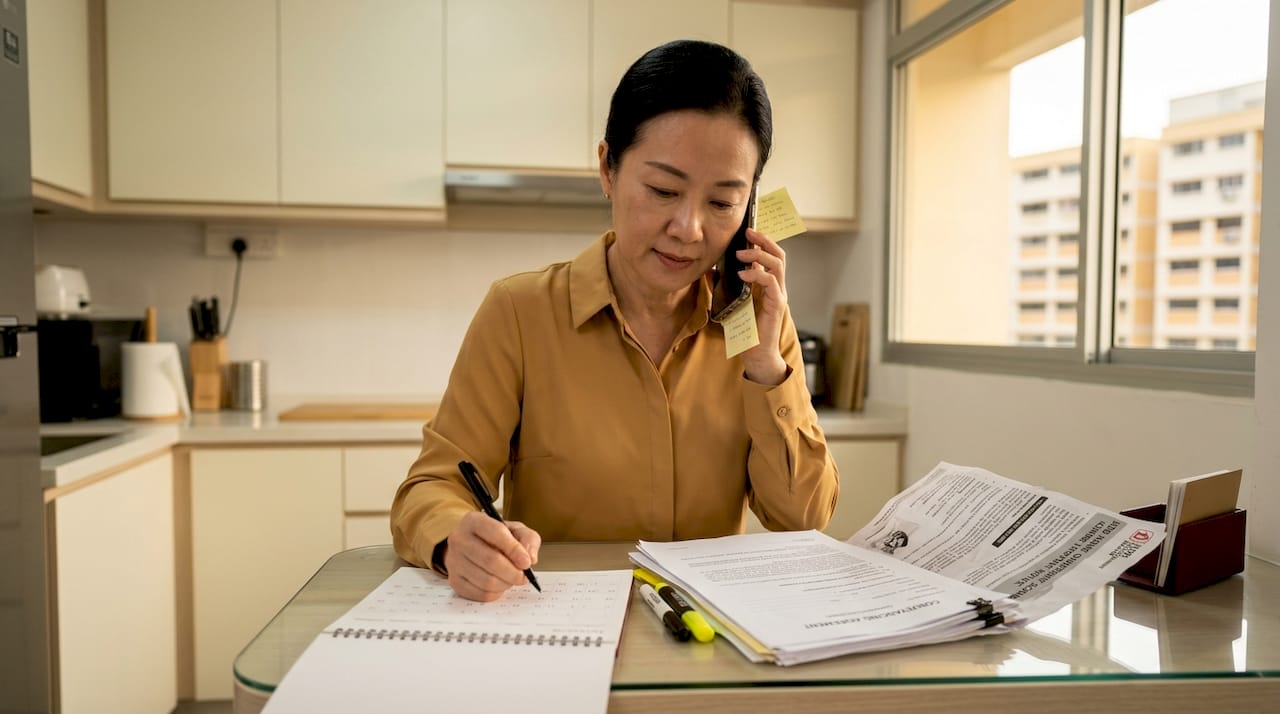
One more important point: paperwork delays are the most common reason DIY sales stall. Research consistently shows that incomplete documentation is the leading cause of transaction delays in Singapore’s resale market. Organize your documents in a dedicated folder, both physical and digital, from day one.
Verifying your successful sale and what to expect after
By steering clear of common mistakes, you’re set up for a smooth handover. Here’s how to confirm your sale is complete and your obligations are fully closed.
Once HDB approves your resale application or your private property conveyancing is finalized, several closing steps remain. Do not assume the sale is done until every item on this list is confirmed:
Endorse all final documents. Log in to HDB’s My Flat Dashboard and complete all digital endorsements. For private properties, sign all transfer documents with your lawyer present.
Settle remaining fees. Pay any outstanding HDB administrative fees, legal fees, and property tax up to the date of completion.
Confirm CPF refund. Your CPF Board will automatically deduct the principal CPF amount used for the purchase plus accrued interest from your sale proceeds. Verify this calculation with your lawyer before completion.
Transfer keys and ownership. At the HDB completion appointment, hand over all keys, access cards, and any relevant documents to the buyer. For private properties, your lawyer coordinates the key handover date.
Receive your sale proceeds. After all deductions, your net proceeds are deposited into your bank account. Confirm the exact amount with your lawyer or HDB before the appointment.
Check HDB’s confirmation. After completion, verify your transaction status through HDB’s My Flat Dashboard. The system will show the flat as transferred once ownership is updated.
Pro Tip: Keep both a hard copy and a digital backup of every resale document, including your OTP, resale application, completion letter, and CPF refund statement. Store them in a secure location. You may need these records for tax purposes or future property purchases. The fast HDB sale checklist is a useful reference to confirm you haven’t missed any final steps.
Why most people misunderstand DIY home selling in Singapore
Having closed your sale, let’s reflect on the real lessons from the DIY journey versus what most first-timers expect.
Here is the uncomfortable truth: most people who research “no commission” selling in Singapore focus entirely on what they save and almost nothing on what they now own. The savings are real. But the responsibility is equally real.
The biggest misconception is that “no agent” means “no cost.” It does not. Selling without an agent still requires legal fees, government fees, and processing charges. What you eliminate is the commission. That distinction matters when you’re budgeting.
The second misconception is that the paperwork is manageable with minimal preparation. It is not. HDB’s resale process involves multiple sequential steps, each with its own deadline and documentation requirement. Miss one, and you can set your sale back by weeks. We’ve seen sellers lose buyers entirely because a form was submitted late or a document was missing.
The third and perhaps most important insight is this: the sellers who succeed with DIY are not necessarily the most knowledgeable about real estate. They are the most organized. They use official tools like HDB’s My Flat Dashboard. They read every checklist. They ask questions early rather than guessing. They treat the process like a project with deadlines, not a casual task.
There is also a middle ground worth considering. You do not have to choose between paying full commission and going completely alone. Flat fee platforms and fixed fee services give you professional support for a fraction of the traditional cost. The HDB selling strategies available today make it easier than ever to get help where you need it without overpaying for it.
Be willing to consult a lawyer or use a digital platform when the complexity warrants it. The cost of a single compliance mistake can easily exceed the cost of getting targeted help upfront.
Ready to sell your home commission-free? Get expert support
Selling your home without paying full agent commission is completely achievable in Singapore. You’ve seen the steps, the timelines, and the pitfalls. The process rewards preparation and penalizes shortcuts.
When you’re ready to move forward, Pallipallisell.com gives you a smarter path. Instead of paying $10,000 to $30,000 in commission, you pay a low fixed fee of $688 to list your property, connect directly with buyers, and manage your sale from start to finish. Check the affordable selling fee options to see exactly what’s included. You can also browse current property listings to see how other Singapore homeowners are presenting their homes to buyers right now. Take control of your sale and keep more of your proceeds.
Frequently asked questions
Is it legal to sell my HDB flat in Singapore without an agent?
Yes, it is completely legal to sell your HDB flat on your own by following the official HDB resale process without engaging a property agent.
What fees must I still pay when selling my home without an agent?
You must still pay legal/conveyancing fees, HDB administrative charges, and applicable stamp duties. Selling without an agent eliminates the commission but not mandatory government and legal transaction fees.
How do I start a commission-free HDB resale?
Register your Intent to Sell via HDB’s My Flat Dashboard, prepare all required documents, and follow each official step outlined by HDB. The DIY resale workflow is fully available online.
What is the biggest mistake DIY sellers make?
The most common error is missing critical compliance or paperwork deadlines, which causes costly delays and can void the transaction. DIY eligibility and procedural steps are mandatory and must be followed in sequence without shortcuts.
Recommended


Comments