Rules That Govern Agentless HDB Sales in Singapore


An agentless HDB sale is defined as a resale transaction where the seller personally completes every mandatory step on the HDB Resale Portal without delegating to a licensed property agent. This is not a shortcut or a simplified process. The rules that govern agentless HDB sales are identical to those in agent-assisted transactions, covering Intent to Sell registration, Option to Purchase (OTP) issuance, eligibility checks, and resale application deadlines. What changes is who does the work. You do. Understanding this distinction is the first step toward completing your sale without costly mistakes.
What rules govern agentless HDB sales?
Selling your HDB flat without an agent is fully legal and increasingly common in Singapore. The HDB Resale Portal is structured to support direct buyer-seller transactions, but it enforces every statutory rule and milestone without exception. No rule is waived because you chose to go it alone.
The core framework rests on four pillars: Intent to Sell registration, OTP issuance and registration, resale application submission, and eligibility compliance. Each pillar has fixed deadlines and document requirements. Miss one, and the entire transaction stalls or gets rejected administratively.
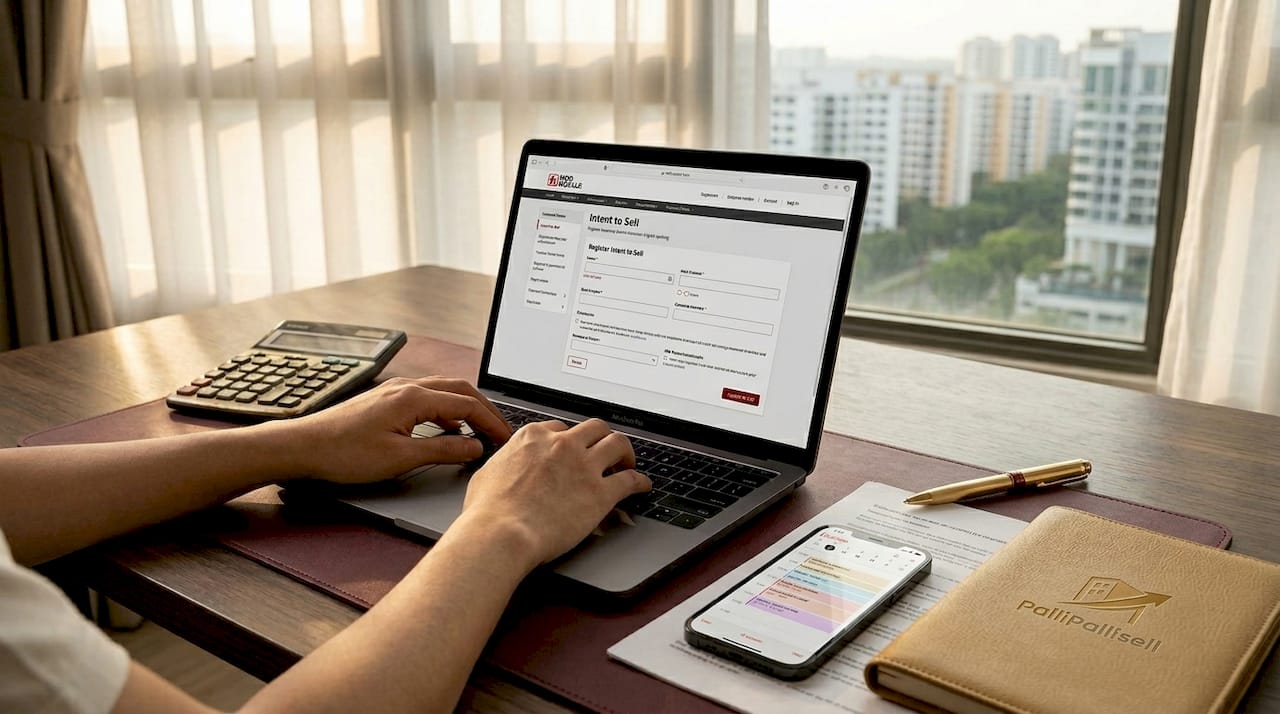
Pro Tip: Before you list your flat anywhere, log into the HDB Resale Portal and confirm your eligibility to sell. This takes minutes and prevents wasted effort if a condition like the Minimum Occupation Period has not been met.
What official steps must sellers personally complete?
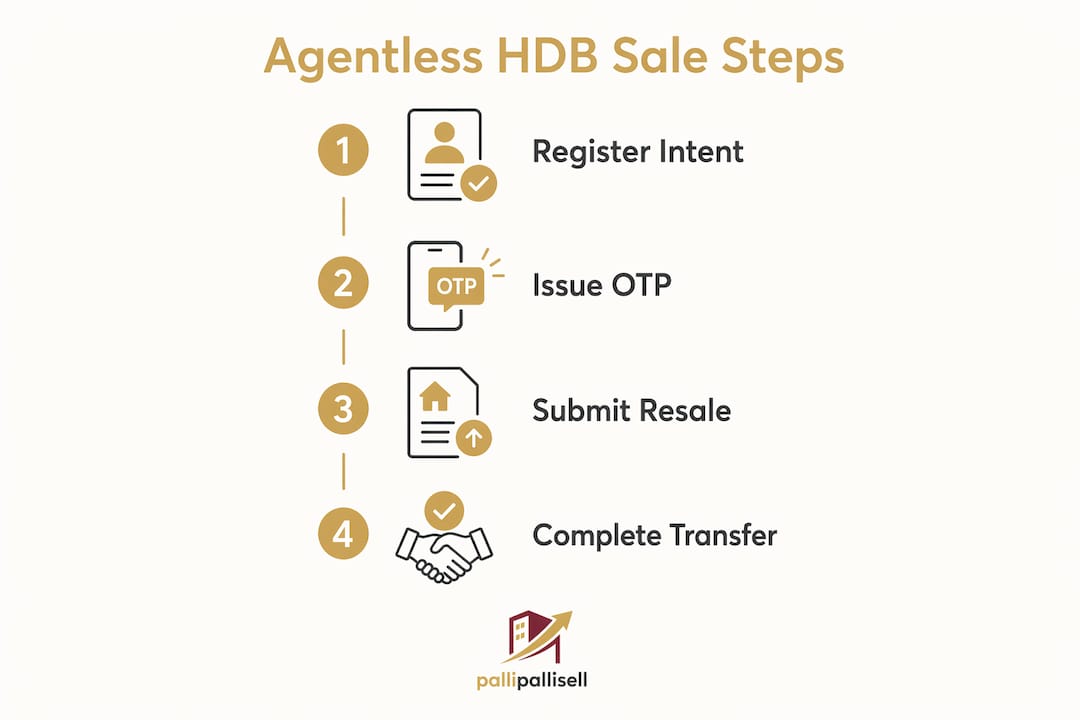
The HDB Resale Portal structures the agentless sale into a clear sequence. You must complete each step personally. Here is the mandatory order:
Register your Intent to Sell. Only one owner registers when multiple owners exist. This step is non-transferable and cannot be delegated to a buyer or third party. It signals to HDB that you intend to sell and unlocks the next steps in the portal.
Receive the HDB Flat Eligibility (HFE) letter. Both you and your buyer must obtain HFE letters before the OTP is granted. These letters confirm eligibility, CPF usage, and loan or grant details for both parties.
Grant the Option to Purchase (OTP). Use only the HDB-prescribed OTP form. The OTP is valid for 21 calendar days and is exclusive during that period. You cannot grant another OTP while one is active.
Register the OTP on the portal within 2 calendar days of granting it. This is a hard deadline. Missing it risks administrative rejection.
Submit the resale application. Both buyer and seller must submit resale applications within 7 days of each other on the portal. Coordinate this with your buyer before the OTP is even signed.
Pro Tip: Set calendar reminders the moment you grant the OTP. The 2-day OTP registration deadline and the 7-day resale application window are the two most commonly missed deadlines in agentless sales.
How do timing and validity rules impact the sale?
Timing is where most agentless sales run into trouble. The rules create a chain of validity windows, and each one must be active when the next step occurs.
Milestone | Deadline or Validity Period | Consequence of Missing |
Intent to Sell | Cannot grant OTP; sale halted | |
OTP grant | Must occur while Intent to Sell is valid | OTP is legally invalid |
OTP registration | Within 2 calendar days of grant | Administrative rejection risk |
Resale application | Buyer and seller within 7 days of each other | Application rejected |
OTP exclusivity | 21-day option period | No second OTP permitted |
The most overlooked risk is the expiry of your Intent to Sell during a long negotiation. If you spend three months negotiating price and your Intent to Sell lapses, you cannot grant the OTP until you re-register. That resets your timeline and can cause a buyer to walk away.
The 21-day OTP window also creates pressure. Your buyer must decide within that period. If they do not exercise the OTP, the option fee is forfeited and you are free to sell to someone else. But you must wait for the 21 days to expire before granting a new OTP to another buyer.
Pro Tip: If negotiations are taking longer than expected, check your Intent to Sell expiry date on the portal. Re-register early rather than waiting for it to lapse.
What legal documents and eligibility checks apply?
The legal framework for an HDB resale transaction does not shrink because there is no agent. You must use the HDB-prescribed OTP form and legal contracts. Deviating from these forms creates legal exposure that is expensive to fix.
Key eligibility and document requirements include:
Minimum Occupation Period (MOP). The MOP is typically 5 years from your key collection date. You cannot sell before this period is fulfilled unless HDB grants a specific exception with legal proof.
Ethnic Integration Policy (EIP) and SPR quota. HDB’s EIP and SPR quota restrict which buyers can purchase your flat based on ethnic group and residency status. Check the current quota for your block before marketing your flat. A buyer who fails the EIP check cannot complete the purchase, wasting both parties’ time.
HFE letters. Both parties need valid HFE letters before the OTP is granted. These are not optional documents. They gate the entire transaction.
Conveyancing. Legal verification at OTP grant and completion is required even without an agent. Errors in these documents are costly to correct after the fact. Engage a conveyancing lawyer for this stage even if you handle everything else yourself.
The comparison below shows what changes and what stays the same when you sell without an agent.
Requirement | With Agent | Without Agent |
Intent to Sell registration | Agent guides, seller registers | Seller registers personally |
OTP form | Agent prepares | Seller prepares using HDB form |
EIP/MOP eligibility check | Agent verifies | Seller verifies independently |
Conveyancing | Agent coordinates lawyer | Seller engages lawyer directly |
Portal submissions | Agent submits on behalf | Seller submits directly |
How does selling without an agent differ in practice?
The legal steps are identical whether or not you use an agent. What changes is who coordinates, communicates, and tracks every deadline. That responsibility falls entirely on you.
Here is what you take on personally in an agent-free HDB transaction:
Marketing and pricing. You set the asking price, write the listing, take photos, and post on property portals. No one will advise you on market pricing unless you seek it out.
Buyer vetting. You confirm that prospective buyers hold a valid HFE letter and meet EIP requirements before granting the OTP. Skipping this step wastes your 21-day OTP window.
Negotiation. All price and terms discussions happen directly between you and the buyer. Document every agreement in writing before the OTP is signed.
Coordination on deadlines. Coordinating portal submissions within the 7-day relative window is a communication challenge. Agree with your buyer upfront on who submits what and by when.
Legal engagement. You contact and brief the conveyancing lawyer directly. This is not optional. It is a required legal checkpoint.
The financial case for going agentless is clear. Agent commissions in Singapore typically run 1% to 2% of the sale price. On a $500,000 flat, that is $5,000 to $10,000. Platforms like Pallipallisell charge a flat fee of $688, which means the savings are substantial. But those savings come with real administrative responsibility. The sellers who succeed are those who treat the process with the same rigor an agent would apply.
Key takeaways
Selling your HDB flat without an agent is fully governed by HDB’s formal rules, and success depends on personally managing every deadline, document, and eligibility check without exception.
Point | Details |
Intent to Sell is mandatory | Register personally on the HDB Resale Portal before any other step can proceed. |
OTP deadlines are strict | Register the OTP within 2 days of granting it; both parties submit resale applications within 7 days of each other. |
Intent to Sell expires | The 12-month validity must remain active when you grant the OTP or the sale halts. |
EIP and MOP apply equally | Buyer eligibility and your MOP status must be confirmed before marketing your flat. |
Conveyancing is still required | Engage a lawyer for OTP and completion documents even when selling without an agent. |
Why most agentless sales fail at the portal, not the negotiating table
I have seen sellers spend months preparing their flat, pricing it well, and finding a motivated buyer, only to have the transaction collapse at the portal submission stage. The failure is almost never about price or marketing. It is about missed deadlines and expired documents.
The Intent to Sell expiry is the silent killer. Sellers register it, start negotiating, and forget to check whether it is still valid six months later. By the time they are ready to grant the OTP, the Intent to Sell has lapsed. The buyer gets frustrated. The deal falls apart.
My honest advice: treat the HDB Resale Portal as your project management tool, not just a submission system. Check it regularly. Know your expiry dates. And do not skip the conveyancing lawyer. I have seen sellers try to handle the OTP documents themselves to save a few hundred dollars, only to face errors that cost thousands to fix and delay completion by weeks.
The sellers who complete agentless sales smoothly are the ones who prepare a clear timeline with their buyer before the OTP is signed. They agree on submission dates, confirm EIP eligibility early, and keep their documents current. That level of preparation is what separates a smooth sale from a stressful one. You can find a practical checklist of the required seller documents to use as your reference throughout the process.
— Brandon
Sell your HDB flat without agent fees using Pallipallisell
You now know the rules. The next step is putting them into action without paying thousands in agent commissions.
Pallipallisell is built for exactly this situation. For a flat fee of $688, you get a full listing on the platform, direct buyer communication tools, and access to guides that walk you through every HDB portal step. The platform is designed to support agentless HDB sellers from Intent to Sell registration through to completion. If you want to see what the fee covers before committing, check the full pricing breakdown and compare it against a standard agent commission on your flat’s value. The math is straightforward.
FAQ
What is the first step in an agentless HDB sale?
The first step is registering your Intent to Sell on the HDB Resale Portal. Only one owner registers when there are multiple owners, and this step must be completed before any other part of the sale can proceed.
Can I use my own OTP form when selling without an agent?
No. You must use the HDB-prescribed OTP form for all resale transactions. Using a non-standard form creates legal risk and will not be accepted by HDB during the resale application process.
How long is the OTP valid in an HDB resale sale?
The OTP is valid for 21 calendar days from the date it is granted. During this period, the seller cannot grant another OTP to a different buyer, maintaining legal exclusivity for the current buyer.
What happens if I miss the 7-day resale application deadline?
If the buyer and seller do not submit their resale applications within 7 days of each other on the HDB Resale Portal, the application risks administrative rejection. You would need to restart the submission process, which delays the entire transaction.
Do I still need a lawyer if I sell my HDB flat without an agent?
Yes. Conveyancing is required at the OTP grant and completion stages regardless of agent involvement. Legal errors in these documents are costly to correct and can cause the transaction to fail. Engage a conveyancing lawyer even if you handle all other steps yourself.
Recommended


Comments