What Is a Flat Fee Property Agent in Singapore?
- Pallipallisell

- May 25
- 8 min read

If you’ve heard the term “flat fee property agent Singapore” and wondered whether it’s just a cheaper version of the same service, you’re not alone. Many Singapore homeowners assume flat fee agents do everything a traditional agent does, just for less money. That’s not quite right. The flat fee model is a genuinely different arrangement with real cost savings and real trade-offs. This guide breaks down exactly what you get, what you give up, and how to decide whether it’s the right fit for your property sale.
Table of Contents
Key takeaways
Point | Details |
Flat fee is a fixed cost | You pay one set price regardless of your property’s value, unlike commission-based agents. |
Service scope is limited | Listing and scheduling are usually included, but viewings, negotiations, and buyer Q&A often are not. |
Sellers carry more responsibility | You handle buyer interactions, showings, and much of the paperwork yourself. |
Best for straightforward sales | Hot market properties and experienced sellers get the most value from this model. |
Legal rules still apply | Dual representation is prohibited in Singapore, so knowing your agent’s scope and obligations protects you. |
What is a flat fee property agent in Singapore?
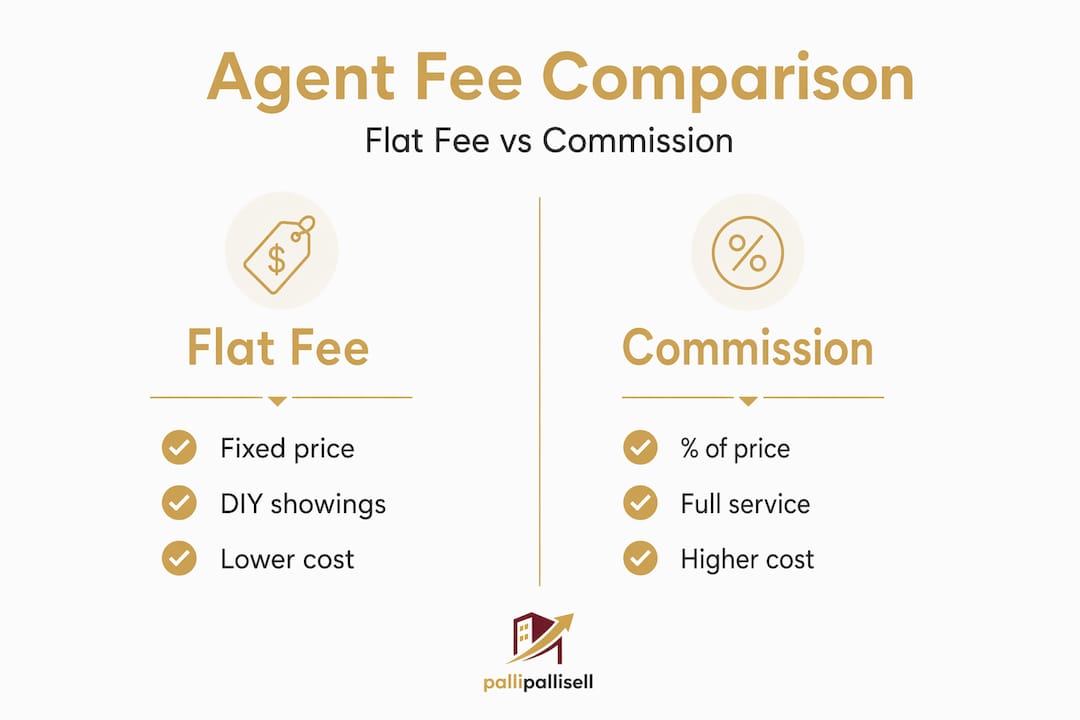
A flat fee property agent charges you a fixed price for defined services, regardless of your property’s final sale price. Sell a $600,000 HDB flat or a $3 million landed home, the fee stays the same. That’s the core appeal and also the core distinction from traditional commission-based agents.
What does that fixed price typically cover? Most flat fee agents in Singapore will:
List your property on major portals like PropertyGuru and 99.co
Prepare and upload your listing with photos and descriptions
Arrange and schedule viewing appointments
Handle basic administrative tasks related to the listing
What it generally does not cover is where many sellers get surprised. Flat fee service scope typically excludes attending viewings on your behalf, negotiating with buyers, answering buyer questions directly, or managing the full transaction process through to completion.
This means you, the seller, take on a significantly larger role. You show potential buyers around your home. You field their questions. You handle price negotiations. For sellers who are confident, available, and familiar with the process, that’s a perfectly manageable trade-off. For sellers who want a hands-off experience, it’s a much bigger ask than the low price tag might suggest.
Pro Tip: Before signing with any flat fee agent, request a line-by-line breakdown of included and excluded services. What looks like a full service package may be a basic listing arrangement. Get clarity before you commit.
Flat fee vs. commission agents: cost and service compared
The financial difference between the two models can be significant. Singapore property agent commission for an HDB resale seller is typically around 2% of the sale price, plus 9% GST (effective from 2024). On a $500,000 flat, that’s $10,000 in commission, plus $900 in GST. On a $1 million private property, the numbers more than double.
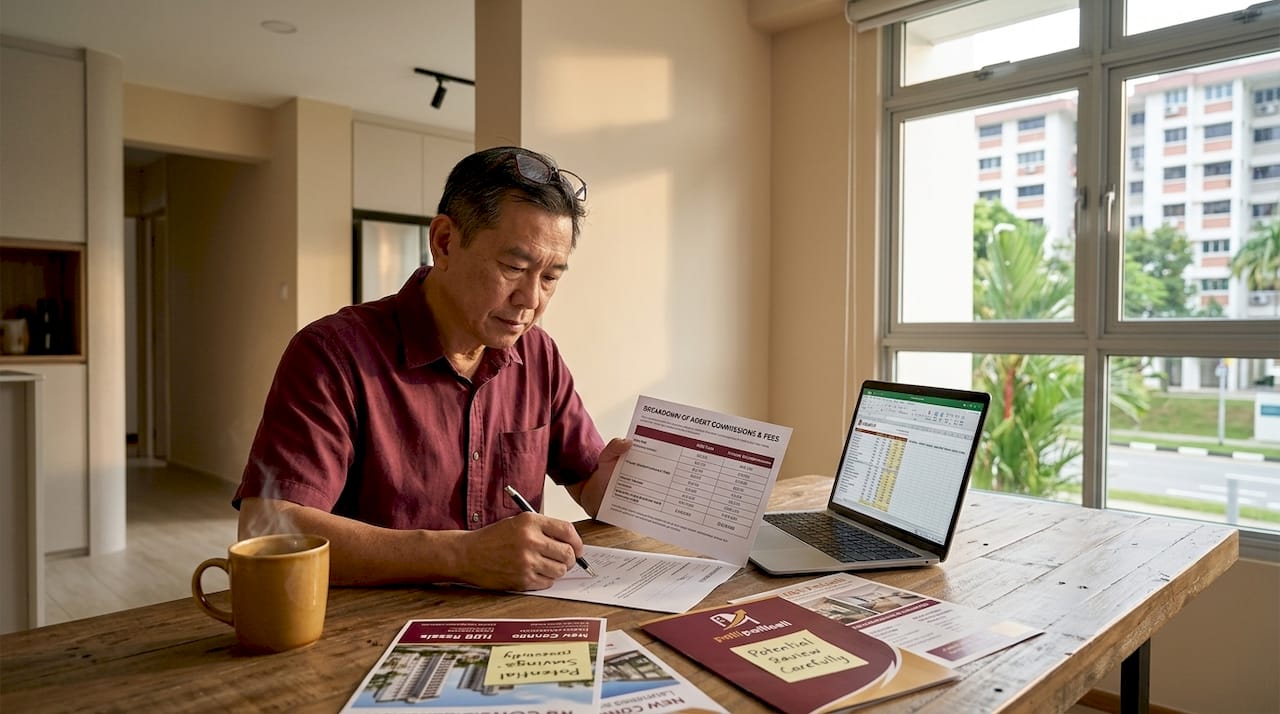
Flat fee agents charge a fraction of that. Platforms like Pallipallisell offer a fixed fee of $688, making the savings on commission immediately obvious.
Here’s a direct comparison across the key variables:
Factor | Commission-based agent | Flat fee agent |
Cost structure | Percentage of sale price (1-2% + GST) | Fixed fee regardless of price |
Service scope | Full service from listing to closing | Listing and scheduling only |
Viewings | Agent attends and manages | Seller attends and manages |
Negotiations | Agent handles on your behalf | Seller handles directly |
Seller effort | Low | High |
Best for | Complex sales, unfamiliar sellers | Simple sales, experienced sellers |
The cost savings are real. But so is the shift in workload. With a commission agent, you’re paying for expertise in buyer engagement, negotiation, and transaction management. With a flat fee agent, you’re paying for access to listings and basic coordination.
There’s also a nuance around buyer-side representation worth understanding. Because dual representation is prohibited in Singapore, your flat fee agent represents only you. Buyers may bring their own agents, who have their own incentives around price and terms. Knowing this in advance helps you prepare for negotiations where you may be the only unrepresented party at the table.
Pro Tip: Ask your flat fee agent whether the buyer’s agent commission is factored into your pricing strategy. Buyers’ agents typically expect 1% + GST. If buyers know you’re unrepresented, some may try to negotiate more aggressively on price.
When flat fee property agents make sense
Not every seller fits this model. Being honest about which category you fall into will save you time, stress, and potentially money.
You have a straightforward property to sell. Sellers with standard HDB flats in high-demand estates or well-priced private condos in active markets benefit most. Hot market listings attract buyers quickly, which reduces the value of aggressive marketing and negotiation skill.
You’re available and willing to host viewings. Flat fee agents don’t attend viewings on your behalf. If you work long hours, travel frequently, or simply prefer someone else to manage this, a commission agent is a better fit.
You understand the sales process. If you’ve sold a property before or done enough research to feel confident about pricing, documentation, and HDB procedures, the learning curve is manageable.
You’re not under time pressure. Commission agents often have stronger buyer networks that can accelerate a sale. If you have a hard deadline, that network access may be worth the cost.
Your property is not highly unique or complex. For unique landed properties, conservation shophouses, or multi-unit investments, strong negotiation skills from an experienced agent can make a meaningful difference to the final price. Complex property sales often justify the higher commission cost because skilled agents frequently recover their fees through better sale prices.
The sweet spot for flat fee is a motivated, informed seller with a desirable property in a healthy market. If that describes you, the model is worth taking seriously. If even two of those conditions are missing, the full-service route may protect both your time and your sale price.
Legal and regulatory considerations
Singapore’s property market is tightly regulated, and flat fee arrangements don’t sidestep those rules. Here’s what you need to know before you sign anything.
Dual representation is illegal. Under the Estate Agents Act, no single agent can legally represent both buyer and seller in the same transaction. Your flat fee agent works for you and you alone. This protects you from conflicts of interest but also means the buyer’s agent, if any, has their own client’s interests in mind.
Agent registration is mandatory. All property agents in Singapore must be registered with the Council for Estate Agencies (CEA). Before engaging any flat fee agent, verify their registration directly on the CEA public register.
GST applies to flat fees too. If your agent is GST-registered, 9% GST applies on top of their flat fee. A $688 fee from a GST-registered agent will cost slightly more. Always confirm total costs upfront.
Get a clear written agreement. Line-by-line service agreements that specify every included and excluded task are not just good practice, they protect both parties. Verbal assurances about “full support” don’t hold up when disputes arise.
Disclosure obligations matter. Your agent must disclose any conflict of interest, including personal relationships with potential buyers, referral arrangements, or dual agency situations in cases involving related parties.
Practical steps to engage a flat fee agent
Approaching a flat fee arrangement with the right preparation makes a real difference to your outcome.
Verify CEA registration. Check the agent’s CEA license number on the official public register before any agreement is signed.
Read the service agreement carefully. Identify every task marked as “excluded” and assess whether you’re prepared to handle it. Tasks like managing HDB paperwork, coordinating with HDB directly, and responding to buyer inquiries may all fall to you.
Price your property accurately. Without an agent doing market analysis for you, spend time researching recent transacted prices for comparable units in your area. Portals like HDB’s e-resale platform and URA’s transaction data are public and free to access.
Prepare your home for viewings. You are presenting it yourself. Clean, declutter, take strong photos, and write a clear, accurate listing description.
Know your bottom line before negotiations start. Decide your minimum acceptable price before buyers contact you, so you negotiate from a clear position rather than reacting under pressure.
Avoid agents who promise full service at flat fee prices. If the pitch sounds too good to be true, it usually is. Understand exactly what you’re buying before you pay.
Pro Tip: Research the advantages of flat fee agents and the limitations side by side before committing. Knowing both gives you the clearest picture of whether this model matches your situation.
My honest take on flat fee agents in Singapore
I’ve watched a lot of sellers go into flat fee arrangements with high expectations and come out frustrated, not because the model is flawed, but because they didn’t account for how much work the “limited” scope actually represents.
The biggest mistake I see is treating the cost savings as a guarantee. You save $10,000 or more on commission. That’s real money. But if your property sits on the market for three extra months because you priced it wrong, or you accept $30,000 less than market value because you felt pressured in a negotiation you weren’t prepared for, the math reverses quickly.
Where flat fee genuinely shines is with sellers who are organized, available, and have done their homework. I’ve seen HDB sellers in sought-after estates close fast and pocket the savings without breaking a sweat. I’ve also seen private property sellers struggle badly because they underestimated what buyer engagement actually requires.
My view is this: the flat fee model for landed property sellers or anyone with a unique asset is a riskier bet than it looks. The negotiation skills of an experienced agent can genuinely add more than their commission on a $2 million transaction. For a standard HDB in a healthy market, the calculation is far more favorable.
The choice should never just be about the fee. It should be about your own readiness and your property’s complexity. Make that assessment honestly, and the right answer usually becomes clear.
— Brandon
Sell smarter with Pallipallisell
If you’ve decided a flat fee arrangement fits your situation, Pallipallisell makes it straightforward to get started. The platform is built specifically for Singapore homeowners who want to list, manage, and close their property sale without paying traditional commission fees.
For just $688, you get your property listed, your sale process organized, and full control over how you present and negotiate your home. There are no hidden charges and no percentage of your sale price disappearing at closing. Check out Pallipallisell’s flat fee pricing to see exactly what’s included. You can also browse available property listings to understand current market activity, or explore your options to sell your HDB without an agent if you want to go fully independent.
FAQ
What does a flat fee property agent actually do?
A flat fee property agent provides a defined set of services at a fixed price, typically including property listing, basic marketing, and appointment scheduling. Sellers are usually responsible for viewings, buyer communication, and negotiations.
How much can I save with a flat fee agent in Singapore?
Traditional seller-side HDB commission rates run around 2% plus 9% GST, which can amount to $10,000 or more on a $500,000 flat. A flat fee arrangement at $688 represents substantial savings on paper, though sellers take on more of the work themselves.
Is flat fee property selling legal in Singapore?
Yes. Flat fee arrangements are legal in Singapore as long as the agent is CEA-registered and complies with regulations, including the prohibition on dual representation and full disclosure of service scope and fees.
When is a commission agent better than a flat fee agent?
A commission agent is typically a better fit for complex or unique properties, sellers without time for viewings, and situations where strong negotiation is needed. Full-service agents often recover their fees through better pricing on high-value or difficult-to-sell properties.
Does GST apply to flat fee agent charges?
Yes. If the flat fee agent is GST-registered, 9% GST applies on top of the flat fee. Always confirm the total cost inclusive of GST before signing any agreement.
Recommended


Comments