HDB Ownership Rules Explained for Singapore Homeowners
- Pallipallisell

- 6 days ago
- 8 min read
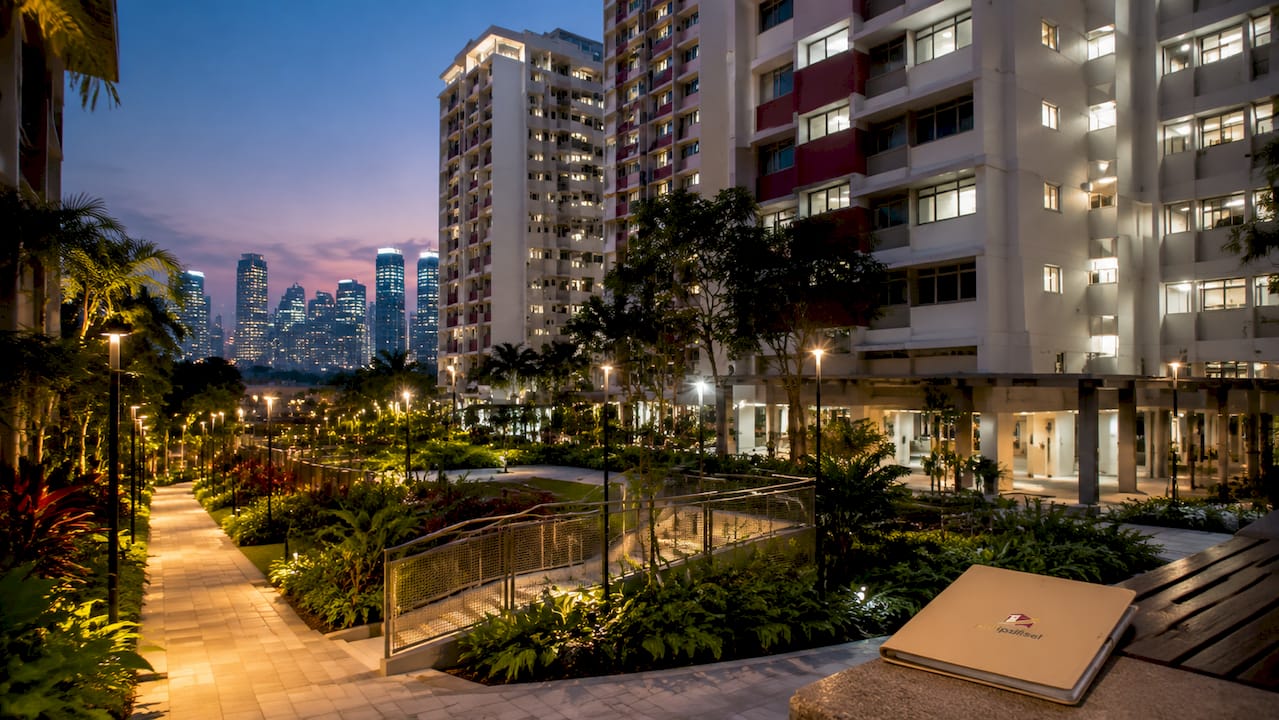
HDB ownership rules define the legal conditions under which Singapore Citizens and Permanent Residents may buy, occupy, rent, and sell Housing Development Board flats. The core framework rests on three pillars: eligibility criteria, the Minimum Occupation Period (MOP), and restrictions on simultaneous private property ownership. Getting these rules wrong carries real consequences, from financial penalties to compulsory acquisition by HDB. This guide breaks down every major regulation you need to know as a homeowner in 2026, covering eligibility, MOP obligations, inheritance rules, and your rights when renting or selling.
What are the eligibility criteria for owning an HDB flat in Singapore?
HDB eligibility criteria determine who can apply for a flat before any purchase begins. The rules apply to both Build-To-Order (BTO) and resale transactions, and they are stricter than most homeowners expect.
The non-negotiable starting point is citizenship. At least one applicant in the household must be a Singapore Citizen. Singapore Permanent Residents can co-apply, but they cannot purchase an HDB flat without a citizen in the application. Singles who are Singapore Citizens may apply under the Single Singapore Citizen Scheme, but only after age 35.
Beyond citizenship, HDB requires a valid family nucleus. Accepted groupings include:
Married couples or fiancé/fiancée pairs
Parents with children
Siblings applying together
Singles aged 35 and above under the Single Singapore Citizen Scheme
Widowed or divorced applicants with children
Income ceilings apply to BTO flats and some resale grants. For most BTO flat types, the household income ceiling sits at S$14,000 per month. Larger families applying for bigger flat types may qualify for a higher ceiling. Resale flats have no income ceiling for purchase, but CPF Housing Grants are income-tested.
Before you submit any application, you need an HDB Flat Eligibility letter. The HFE letter is the official proof of eligibility required at the start of any HDB purchase. It takes 21–30 days to process and stays valid for 9 months. Apply for it early so it does not delay your timeline.
Pro Tip: Apply for your HFE letter before you start viewing flats. Sellers and agents will take your offer more seriously when you already have eligibility confirmed.

How does the Minimum Occupation Period (MOP) affect your rights?
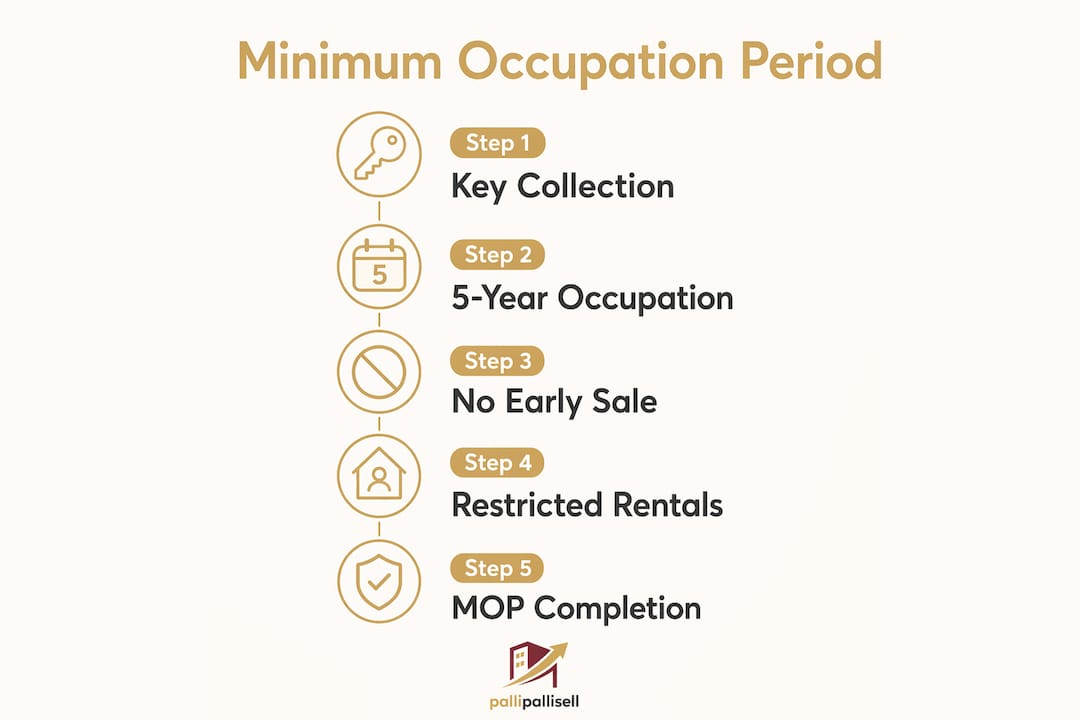
The MOP is a compulsory 5-year period starting from the date you collect your keys. During this time, you must physically occupy the flat as your primary residence. The MOP is not a suggestion. It is a legal condition of ownership.
What you cannot do during MOP
Three actions are strictly off-limits while your MOP is running:
Sell the flat on the open market
Rent out the entire flat to any tenant
Purchase any private residential property in Singapore or overseas
Room rentals are permitted during MOP, provided you get HDB approval and the tenant meets eligibility conditions. Renting individual rooms is the only rental activity allowed before your MOP ends.
When does MOP actually start?
MOP is counted from the key collection date, not from the date of purchase, signing of the Agreement to Lease, or any other earlier milestone. This is a common misunderstanding that catches homeowners off guard. If you collected your keys in march 2021, your MOP ends in march 2026, regardless of when you signed your paperwork.
Consequences of violating MOP
Failure to observe MOP rules can result in compulsory acquisition of your flat by HDB at below-market value. Financial penalties also apply. HDB actively monitors compliance, and violations discovered through audits or complaints are treated seriously. The risk is not worth it.
Pro Tip: Log your key collection date in your calendar and set a reminder 6 months before MOP ends. That gives you time to plan your next property move without rushing.
Can Singaporeans own both an HDB flat and private property?
Yes, but only after MOP is complete. Singapore Citizens can own both an HDB flat and private property simultaneously once they have fulfilled the 5-year MOP. The MOP marks the legal point at which investment property ownership becomes possible, not a permanent ban on private property.
The process for Singapore Citizens after MOP works as follows:
Confirm MOP completion. Verify your key collection date and calculate the exact end date before making any offer on private property.
Budget for ABSD. Singapore Citizens purchasing a second residential property must pay 20% Additional Buyer’s Stamp Duty on the private property. This is a significant upfront cash cost on top of the purchase price.
Retain or sell your HDB flat. Citizens are not required to sell their HDB flat when buying private property after MOP. Both properties can be held simultaneously.
Check financing rules. Holding two properties affects your loan-to-value limits and Total Debt Servicing Ratio calculations with banks.
The rules are different for Singapore Permanent Residents. PRs who acquire private residential property must dispose of their HDB flat within 6 months of the private property purchase. Keeping both is not an option for PRs.
A common misconception is that completing MOP removes all restrictions. It does not. ABSD still applies, and financing rules tighten when you hold multiple properties. Plan your finances before you commit to a second purchase.
What are the rules for inheritance and transfer of HDB ownership?
HDB inheritance is more complex than most families realize. Many families assume automatic inheritance of HDB flats, but HDB approval is required and heirs must meet eligibility conditions.
The rules differ significantly based on how the flat is owned.
Ownership Type | Transfer on Death | Probate Required | HDB Approval Needed |
Joint tenancy | Passes to surviving owner automatically | No | No |
Tenancy-in-common | Passes through deceased’s estate | Yes | Yes |
Joint tenancy ownership allows automatic transfer to the surviving co-owner without probate. This is faster and simpler for families. Tenancy-in-common requires the estate to go through legal probate, which takes time and adds cost.
When an heir inherits a flat through tenancy-in-common, HDB checks whether the heir meets standard eligibility conditions. The heir must be a Singapore Citizen or PR, must not already own another HDB flat, and must form a valid family nucleus with the flat. If the heir does not meet these conditions, HDB may require the flat to be sold within a set timeframe.
Inheritance planning matters. If you want a specific family member to inherit your flat without delays, review your ownership structure now. Switching from tenancy-in-common to joint tenancy is possible with HDB’s approval and is worth considering for estate planning purposes.
What are your responsibilities as an HDB owner for renting and resale?
Your obligations as an HDB owner do not end after you move in. Renting and selling both come with clear rules you need to follow.
Renting your HDB flat
Room rentals are allowed during MOP with HDB approval. Whole-flat rental is only permitted after MOP is complete, and you must apply to HDB for a subletting license. HDB actively enforces subletting rules to prevent misuse, with penalties including compulsory acquisition for unauthorized rentals. Do not rent out your flat without formal approval, even informally or short-term.
Key rental rules to follow:
Register all tenants with HDB within 7 days of move-in
Tenants must be Singapore Citizens, PRs, or holders of valid long-term passes
Short-term rentals of less than 6 months are not permitted
The maximum rental period per approval cycle is 3 years
Selling your HDB flat
Once MOP is complete, you can list your flat on the resale market. The Option Fee during HDB resale is capped at S$1,000, with a 21-day exclusive option period for the buyer. Resale completion typically takes 8–12 weeks after the Option to Purchase is exercised.
One financial item that surprises many sellers is Cash Over Valuation. COV must be paid fully in cash by the buyer when the agreed price exceeds HDB’s official valuation. As a seller, understanding COV helps you price your flat realistically and negotiate with confidence. Buyers who are unprepared for COV may back out, which delays your sale.
Pro Tip: Get an HDB valuation estimate before you set your asking price. Pricing too far above valuation reduces your buyer pool because COV must be paid in cash.
For a detailed walkthrough of the full process, the HDB resale process guide covers every step from listing to completion.
Key Takeaways
HDB ownership rules require Singapore homeowners to meet eligibility criteria, complete a 5-year MOP, and follow strict rules on renting, inheritance, and simultaneous private property ownership.
Point | Details |
HFE letter is mandatory | Apply at least 30 days before your purchase to avoid delays in your HDB buying timeline. |
MOP starts at key collection | Count your 5-year MOP from the physical key handover date, not the purchase or signing date. |
Citizens can hold both properties | After MOP, Singapore Citizens may keep their HDB flat and buy private property, but 20% ABSD applies. |
PRs must choose one | Permanent Residents must sell their HDB flat within 6 months of acquiring private residential property. |
Inheritance requires HDB approval | Heirs inheriting through tenancy-in-common must meet eligibility conditions or face a mandatory sale. |
Why most homeowners get MOP wrong until it costs them
The single biggest mistake I see Singapore homeowners make is treating the MOP as a formality rather than a hard legal boundary. People assume they know when their MOP ends, but they calculate it from the wrong date. They count from when they signed the Agreement to Lease or paid their downpayment. The actual clock starts on the day they collected their keys. That gap can be months, and acting on the wrong date can trigger compulsory acquisition.
Inheritance is the second area where families get into trouble. I have seen cases where a parent passes away and the adult children assume the flat transfers automatically. It does not, unless the flat is held under joint tenancy. Tenancy-in-common estates go through probate, and if the heir already owns an HDB flat, they may be forced to sell one. These situations are stressful and avoidable with early planning.
The subletting rules also catch people off guard. Renting a room to a friend without registering the tenant with HDB seems harmless. HDB does not see it that way. Enforcement is real, and the penalties are severe. If you want to rent, do it properly and get the approval in writing.
My honest advice: treat every HDB rule as a firm deadline, not a guideline. The consequences of getting it wrong are financial and permanent. Check your sale documents checklist before you make any move, whether you are selling, renting, or inheriting.
— Brandon
Selling your HDB flat without the agent commission
Once your MOP is complete and you are ready to sell, you do not have to pay a traditional agent commission of 1% to 2% of your sale price. On a S$600,000 flat, that is up to S$12,000 in fees you can keep.
Pallipallisell lets you sell your HDB flat directly to buyers for a flat fee of S$688. You list your property, communicate with buyers, and close the deal on your terms. The platform gives you full visibility over every step. Check the selling fee structure to see exactly what you pay and what you get. No hidden costs, no surprises.
FAQ
What is the MOP for HDB flats in Singapore?
The MOP is 5 years from the key collection date. During this period, owners must occupy the flat and cannot sell it, rent it out in full, or purchase private property.
Can a Singapore Citizen buy a condo while owning an HDB flat?
Yes, after completing the 5-year MOP. Singapore Citizens must pay 20% ABSD on the private property purchase and can retain their HDB flat simultaneously.
What happens to an HDB flat when the owner passes away?
The outcome depends on ownership type. Joint tenancy passes automatically to the surviving owner without probate. Tenancy-in-common requires probate and HDB approval for the heir to take over.
Do I need an HFE letter to buy a resale HDB flat?
Yes. The HFE letter is mandatory for both BTO and resale purchases. It takes 21–30 days to process and is valid for 9 months.
What is Cash Over Valuation in an HDB resale transaction?
COV is the amount by which the agreed resale price exceeds HDB’s official valuation. COV must be paid fully in cash by the buyer and cannot be covered by CPF or a housing loan.
Recommended

Comments